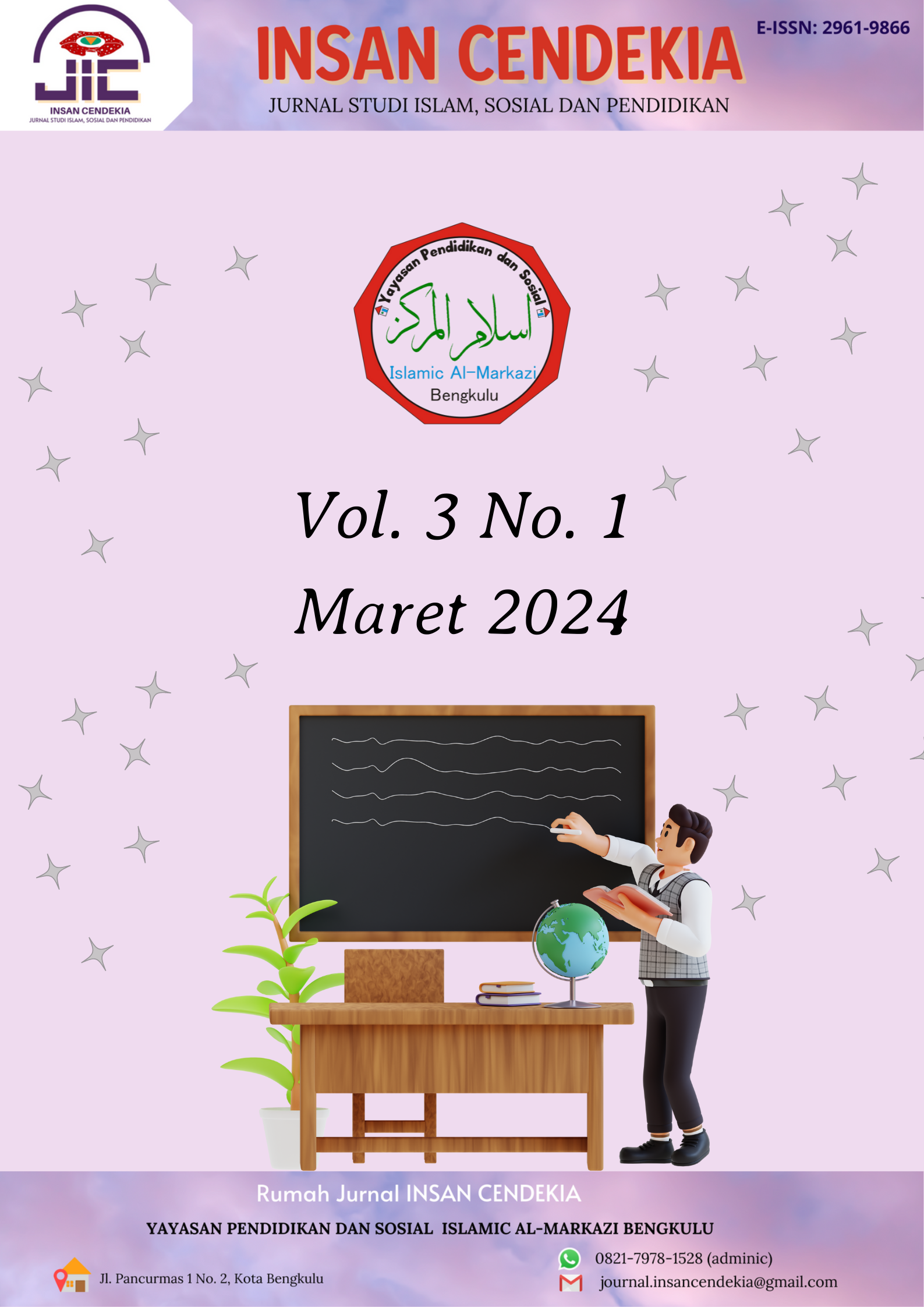
MENJELAJAHI PERSIMPANGAN DINAMIS TEKNOLOGI DAN PENGAJARAN BAHASA INGGRIS MELALUI PELAKSANAAN SEMINAR PERAN TEKNOLOGI DALAM PENGAJARAN BAHASA INGGRIS
DOI:
https://doi.org/10.67528/ic.v3i1.45Keywords:
English Language Teaching, Educational technology, Seminar of educationAbstract
Penguasaan Bahasa Inggris kini semakin vital dalam era globalisasi, didukung oleh peran teknologi yang memperluas akses sumber daya, meningkatkan interaktivitas, dan mendorong kolaborasi global. Artikel ilmiah ini merupakan laporan dari pelaksanaan kegiatan seminar pada mahasiswa yang bertujuan untuk mengeksplorasi secara diskusi ilmiah terkait dampak teknologi dalam pembelajaran Bahasa Inggris, termasuk kecerdasan buatan dan aplikasi digital. Melalui observasi, perencanaan, pelaksanaan, dan evaluasi, rekomendasi diberikan untuk meningkatkan efektivitas pembelajaran. Kegiatan ini ditujukan untuk mahasiswa dan peneliti pendidikan dibidang bahasa, dengan harapan mereka dapat mengetahui secara lebih jauh tentang pemanfaatan teknologi secara optimal dalam pengembangan keterampilan bahasa Inggris.
References
Akmalovna, Z. A. (2024, June). TEACHING ENGLISH THROUGH ONLINE PLATFORMS AND APPS AMONG STUDENTS. In Konferensiyalar| Conferences (Vol. 1, No. 13, pp. 376-381)
Aditama, R. (2022). Implementasi Peran Teknologi Pendidikan Dalam Meginternalisasi Pendidikan Agama Di Masa Pandemi. ANSIRU PAI: Pengembangan Profesi Guru Pendidikan Agama Islam, 6(1), 28-35
Brown, L. & Davis, M. (2021). Motivation and engagement through mobile language learning apps. Language Learning & Technology, 25(3), 98-112.
Fansury, A. H., Rahman, M. A., & Jabu, B. (2021). Developing mobile English application as teaching
Galindo-Domínguez, H., Delgado, N., Losada, D., & Etxabe, J. M. (2024). An analysis of the use of artificial intelligence in education in Spain: The in-service teacher’s perspective. Journal of Digital Learning in Teacher Education, 40(1), 41-56
Hakim, M. A. R., Amrulin, P. K., Zasrianita, F., & Kurniawan, Y. S. (2023).The Implication of Cooperative Integrated Reading and Composition (CIRC) Technique on English Reading Comprehension for Madrasah Aliyah Students. Linguistic, English Education and Art (LEEA) Journal, 6(2), 233-245
Hakim, M. A. R., Sari, E. A., Rizal, S., Revola, Y., & Astari, A. R. N. (2022).Integration of Google Classroom Inference Strategy as Blended Learning Media Toward Islamic Senior High School Students' Reading Ability. Al-Lughah: Jurnal Bahasa, 11(1), 54-71
Hakim, M. A. R., Serasi, R., Revola, Y., Adnan, N. I., & Astari, A. R. N. (2023). The reconstruction of blended learning: Teaching model for full online learning system: A study on English Education Department in Islamic universities in Indonesia. International Journal of Learning, Teaching and Educational Research, 22(4), 1-20
Idris, H. (2018). Pembelajaran model blended learning. Jurnal Ilmiah Iqra’, 5(1).
Knox, J. (2020). Artificial intelligence and education in China. Learning, Media and Technology, 45(3), 298-311
Saputra, A., Hakim, M. A. R., Kurniawan, Y. S., Astari, A. R. N., & Rahmanita, U. (2022). Penggunaan model ASSURE dalam pengembangan video animasi pengajaran bahasa Inggris 2D berbasis studi Islam untuk siswa raudhatul athfal. Jurnal Ilmiah Potensia, 7(1), 23-34
Suhartatik, S., Pusparini, I., & Hakim, M. A. R. (2020). The Development of Virtual Media Based Power Point Presentation (PPT) in Intermediate Speaking in Ikip Budi Utomo Malang. International Journal of Multicultural and Multireligious Understanding, 7(9), 1-10
Suryadi, P. (2021). Penggunaan TIK Dalam Pengajaran Bahasa Inggris Sebagai Bahasa Asing. Jurnal Informatika: STMIK Tulus Cendekia, 1(1), 22–26.
Newton, J. M., Ferris, D., Goh, C., Grabe, W., Stoller, F., & Vandergrift, L. (2018). Teaching English to second language learners in academic contexts. London, England: Routledge
Downloads
Published
Issue
Section
License
Copyright (c) 2025 Ani Sartika, Riski Andini, Arrum Peksi Malachah, Aldo Prasetio

This work is licensed under a Creative Commons Attribution-ShareAlike 4.0 International License.
LICENSE TO PUBLISH:
1. License
Authors who publish with Insan Cendekia agree to the following terms: Authors retain copyright and grant the Insan Cendekia right of first publication with the work simultaneously licensed under the Creative Commons Attribution-ShareAlike 4.0 International (CC BY-SA 4.0) license, that allows others to share (copy and redistribute the material in any medium or format) and adapt (remix, transform, and build upon the material) the work for any purpose, even commercially with an acknowledgement of the work's authorship and initial publication in Insan Cendekia.
2. Author’s Warranties
The author warrants that the article is original, written by stated author/s, has not been published before, contains no unlawful statements, does not infringe the rights of others, is subject to copyright that is vested exclusively in the author and free of any third party rights, and that any necessary written permissions to quote from other sources have been obtained by the author/s.
3. User Rights
Under the Creative Commons Attribution license, the author(s) and users are free to share (copy, distribute and transmit the contribution).
4. Rights of Authors
Authors retain the following rights:
- copyright, and other proprietary rights relating to the article, such as patent rights,
- the right to use the substance of the article in future own works, including lectures and books,
- the right to reproduce the article for own purposes, provided the copies are not offered for sale,
- the right to self-archive the article.
5. Co-Authorship
If the article was prepared jointly with other authors, the signatory of this form warrants that he/she has been authorized by all co-authors to sign this agreement on their behalf, and agrees to inform his/her co-authors of the terms of this agreement.
6. Termination
This agreement can be terminated by the author or Insan Cendekia upon two months’ notice where the other party has materially breached this agreement and failed to remedy such breach within a month of being given the terminating party’s notice requesting such breach to be remedied. No breach or violation of this agreement will cause this agreement or any license granted in it to terminate automatically or affect the definition of Insan Cendekia.
7. Royalties
This agreement entitles the author to no royalties or other fees. To such extent as legally permissible, the author waives his or her right to collect royalties relative to the article in respect of any use of the article by Insan Cendekia or its sublicensee.
8. Miscellaneous
The Insan Cendekia will publish the article, or arrange for its publication, provided that the editorial process is successfully completed and the journal or its sublicensee becomes obligated to publish the article. The Insan Cendekia reserves the right to edit the article for consistency in punctuation, spelling, capitalization, and style, as deemed appropriate.