ANALISIS PENERAPAN PRINSIP BANGUNAN TROPIS PADA MASJID BAITUS SHOBUR ISLAMIC CENTER TULANG BAWANG BARAT
Keywords:
Baitus Shobur Islamic Center Mosque, Tropical Architecture, Thermal Comfort.Abstract
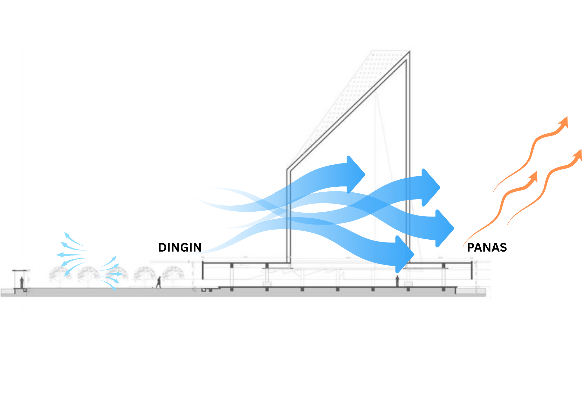
Mosques serve not only as places of worship but also as communal spaces, ideally providing thermal comfort for users, particularly in humid tropical climates such as Indonesia. However, many modern mosques still face challenges including elevated indoor temperatures, suboptimal ventilation, and a lack of tropical design strategies. A research gap exists due to the limited comprehensive studies analyzing the application of tropical architectural principles in large-scale mosques through a microclimate-based evaluative approach. This study aims to assess the extent to which the Baitus Shobur Islamic Center Mosque in Tulang Bawang Barat implements tropical design principles and to evaluate thermal comfort levels based on temperature, humidity, and the Temperature Humidity Index (THI). The methodology includes observation, visual documentation, field measurements using a 5-in-1 meter at three time intervals (07:30, 13:00, and 16:00), and data analysis using the Miles & Huberman approach. The results indicate that most tropical elements, such as cross ventilation, pitched roofs with extended overhangs, and vegetation layout, have been effectively applied, while the highest thermal condition occurs at 13:00 with THI slightly above the comfort threshold. This study provides empirical evidence on the effectiveness of tropical architectural principles in mosques and offers design recommendations to enhance thermal comfort in humid tropical climates.