PENGARUH MATERIAL PENYERAPAN SUARA TERHADAP KENYAMANAN AKUSTIK, STUDI KASUS: BIOSKOP XXI MALL BOEMI KEDATON BANDAR LAMPUNG
Keywords:
Acoustics, Cinema, Sound absorption materials, Reverberation timeAbstract
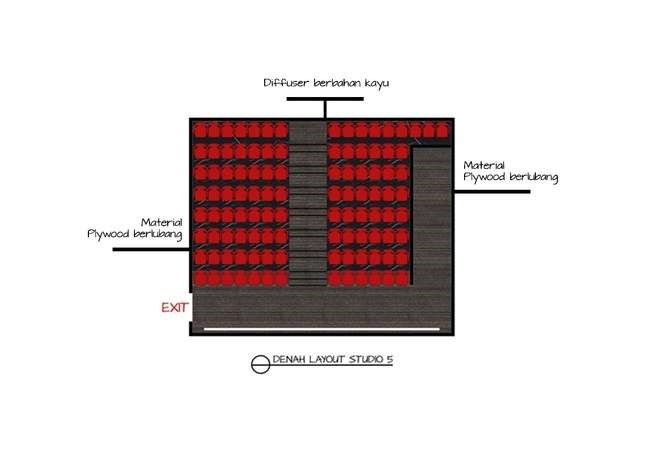
The acoustic quality of cinema auditoriums is strongly influenced by the selection and configuration of interior materials, particularly in controlling reverberation time (RT60). However, many cinemas apply sound-absorbing materials excessively, resulting in overly dry acoustic conditions that fall outside recommended standards. Existing studies rarely provide a comprehensive and quantitative evaluation of material performance in relation to RT60 requirements, creating a significant research gap. This study aims to assess the effectiveness of the existing acoustic materials in Studio 5 of Boemi Kedaton XXI Cinema and to propose material interventions that achieve the ideal RT60 range of 0.8–1.2 seconds. A quantitative descriptive approach was employed, involving RT60 calculations using the Sabine formula, material observation, spatial measurement, and simulation of revised material configurations. Absorption coefficient values were referenced from national standards and established acoustic literature. The results show that the current RT60 value is 0.364 seconds, which is far below the recommended range due to the dominant use of high-absorption materials such as rockwool panels, glasswool ceilings, carpeted floors, and fabric-covered seating. Simulated interventions— including the reduction of high-frequency absorbers, the addition of reflective wooden panels, wooden diffusers, and perforated Helmholtz panels—effectively balanced the total absorption and moved the RT60 value closer to the ideal standard. This study contributes a quantitative framework for evaluating cinema acoustic design and offers material optimization strategies that can be adopted in other film-screening spaces to achieve improved and consistent acoustic performance.